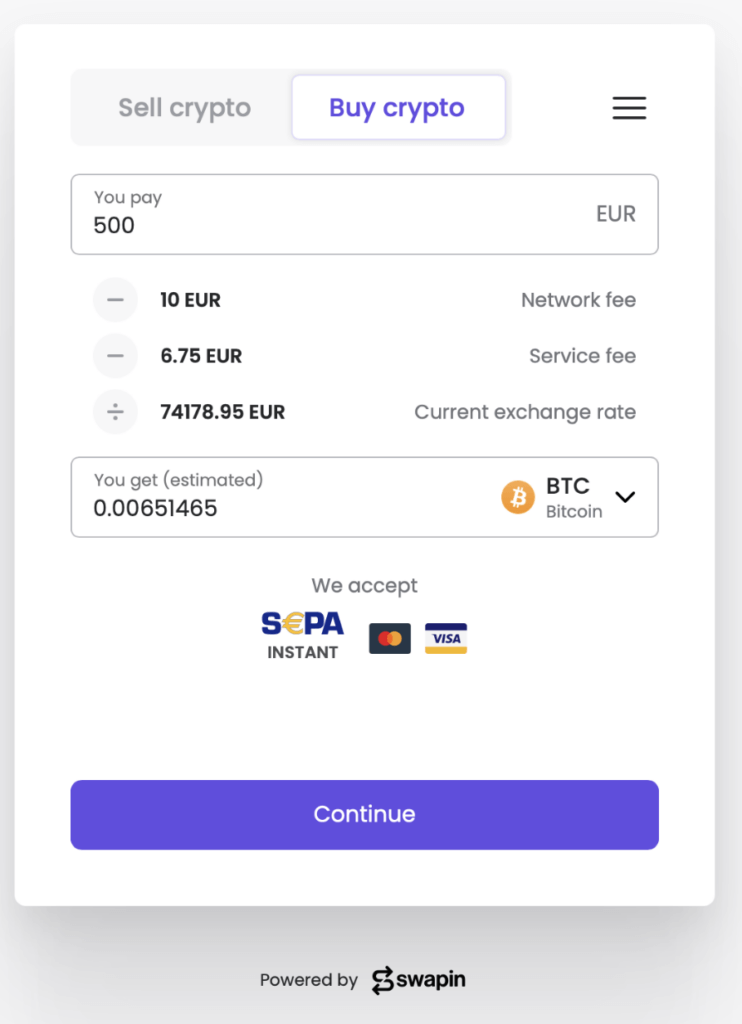
Crypto payment solutions: APIs vs payment links for businesses
Businesses now have multiple ways to accept crypto payments. Payment links allow businesses to get started quickly without building the infrastructure from scratch. On the other hand, APIs offer more control, automation, and integration into existing systems. Both solve the same problem, however they work very differently depending on volume, reconciliation, and compliance.
In this guide, we break down how different crypto payment solutions work, where payment links make sense, when APIs become necessary, and how to choose based on your business model, not just features.
Businesses today can accept crypto in several ways, depending on how much control, automation, and integration they need. The right setup usually depends on transaction volume, internal resources, and how payments fit into existing workflows.
1. Payment links
Payment links are the easiest way to start accepting crypto. The merchant generates a crypto payment link with a fixed amount, shares it with the customer, and receives payment directly. They’re commonly used for one-off payments, invoices, and client billing.
2. Crypto payment gateways
Gateways act as a checkout layer, similar to traditional payment processors. They handle the interaction between the customer and the blockchain, often with built-in features like currency conversion and confirmations.
They’re best used for ecommerce checkouts, online services, and platforms with standard payment flows. Crypto gateways reduce implementation effort and takes couple of weeks to set up and go live.
3. Crypto payment APIs
Crypto payment APIs give businesses full control over how crypto payments are created, processed, and tracked. Payments can be embedded directly into products, platforms, or internal systems.
They’re best suited for SaaS platforms, marketplaces, high-volume businesses, and automated billing and payouts.This solution requires upfront engineering effort but allows for automation, better reporting, and tighter integration with finance systems.
Crypto payment links: fastest and easiest entry to accepting crypto
For enterprise businesses, payment links are the lowest-friction way to introduce crypto payments into an existing workflow. They don’t require changes to product or checkout infrastructure, which makes them useful when speed and operational simplicity matter.
A payment link is a unique, shareable URL tied to a specific transaction containing the payment amount, currency, and destination, and can be embedded into invoices, emails, or internal billing systems. When a customer opens the link, they’re presented with a payment interface. Once the transaction is sent, the system monitors the blockchain, confirms the payment, and updates its status automatically.
Payment links are most effective where payments are initiated outside a traditional checkout flow:
Invoicing clients across borders
Collecting one-off payments for services or contracts
Enabling sales teams to close deals without waiting on engineering
Testing crypto demand in new markets without committing to full integration
It’s useful for teams that need to move quickly without relying on product or engineering bandwidth, making them a practical entry point for offering crypto payments with zero integration.
Crypto payment APIs: more control for scaling businesses
For enterprise businesses, a crypto payment API acts as the layer between the internal systems and blockchain networks. Instead of relying on external checkouts or manual workflows, the backend directly creates payment requests, tracks transactions, and updates systems in real time.
Here’s how the integration is done :
The system generates a payment request via API
A unique address or invoice is created for that transaction
The blockchain is monitored for incoming funds
Once confirmed, the system is notified automatically via webhooks
The payment is recorded, matched, and processed
Some of the common use cases include:
SaaS platforms handling recurring or usage-based billing
marketplaces managing multi-party payments and payouts
fintech products embedding crypto into core payment flows
global businesses processing high transaction volumes across regions
With this, businesses benefit from end-to-end automation and automatic reconciliation. Every transaction can be tied to a specific user, invoice, or event, reducing manual effort. And businesses don’t need to overhaul their payment systems. Funds can be held in crypto, converted to stablecoins, or settled in fiat making global payment acceptance possible.
However, integration requires engineering effort, and the system needs to be maintained over time. But for businesses operating at scale, this is usually the point where crypto payments move from being a workaround to becoming part of core infrastructure.
Key differences between crypto payment links vs crypto APIs
Both crypto payment solutions allow businesses to accept crypto payments without directly managing blockchain infrastructure. The difference is how they integrate into payment systems and how much control businesses have over the payment lifecycle.
Crypto payment links allow businesses to generate a payment request, share it, and the provider handles the rest, from transaction monitoring to confirmation. It’s quick to deploy and easy to use, especially when payments are handled as individual events.
Crypto payment APIs, on the other hand, bring payments inside the infrastructure. Instead of sending users to an external flow, the system creates and tracks payments programmatically. Every transaction can be tied to internal records, triggered by business logic, and updated in real time through callbacks or webhooks . This allows payments to scale with the rest of business operations, particularly when automation, reporting, and control become critical.
Basically, crypto payment links are fast and easy for one-off invoicing payments or even recurring payments. APIs are designed for more complex and custom business needs.
Factor
Payment Links
APIs
Setup
No-code, can go live immediately
Requires integration and engineering effort
Payment flow
External, link-based experience
Embedded directly into product or system
Customisation
Limited to predefined flows
Fully customizable based on business logic
Automation
Basic (status updates, confirmations)
Advanced (webhooks, triggers, workflows)
Reconciliation
Often handled manually or via dashboards
Structured, automated, tied to internal systems
Scalability
Works well for low to moderate volume
Built for high-volume, complex operations
Control
Provider-managed flow
Business-defined flow
Best suited for
Invoicing, one-off payments, quick rollout
SaaS, marketplaces, high-volume global payments
Choosing the right crypto payment solutions for your business
For enterprise businesses, a few factors help decide:
1. Integration depth and system fit
If payments are handled as standalone transactions, solutions like payment links can work
If payments need to connect with internal systems such as billing, ERP, or treasury tools, APIs become necessary
Businesses need payments to flow directly into internal systems for tracking and reporting. APIs enable this by feeding real-time transaction data into backend systems and finance workflows.
2. Transaction volume and operational complexity
Low to moderate volume works better with payment links. For high volume, automated reconciliation and tracking works better with APIs.
As transaction volume increases, manual reconciliation and fragmented data can become risky. Enterprise setups require infrastructure that can handle throughput, audit trails, and consistent processing without degradation.
3. Reconciliation and financial reporting
Manual reconciliation can slow down accounting and reporting. Crypto payment providers take care of conversion so businesses don’t have to. Merchants benefit from:
clear mapping between payments and customers or invoices
audit trails for compliance and reporting
structured data that integrates with accounting systems
4. Compliance and regulatory requirements
Enterprise businesses work with licensed crypto payment providers and in such cases, regulation, compliance, and risk control is non-negotiable:
AML/KYC requirements
transaction monitoring
jurisdiction-specific compliance
custody and fund security
5. Settlement and treasury management
Fund management is a big deciding factor for businesses matters and they need to decide:
whether to hold crypto or settle in fiat
how to manage volatility (often via stablecoins)
how funds integrate with treasury operations
Crypto payments settle in minutes and improve cash flow, however, they require proper infrastructure to connect blockchain transactions with traditional financial systems.
6. Internal resources and time to launch
Depending on the solution businesses choose, time to market can look different. A crypto payment link takes zero integration and merchants can start accepting crypto within a day.
An API solution requires engineering investment and can take anywhere between a couple of weeks to months, depending on the complexity and customisation.
How to choose the right crypto payment solutions provider
When partnering with crypto payment processors, enterprises must look at how they perform across the core areas that directly impact day-to-day operations.
1. Regulation and compliance readiness
A provider should operate within clear regulatory frameworks and support requirements like KYC, AML, and transaction monitoring. This reduces legal risk and makes it easier to operate across jurisdictions.
For businesses, it affects new markets expansion, finance and legal teams readiness, and payment reporting and reconciliation. And a reliable provider handles the tech and compliance work required for business operations.
2. Integration and API reliability
Crypto payments must fit within the existing business operations systems. This includes documentation, webhook reliability, mapping payments to internal records, compatibility with ERP, billing, and treasury systems.
Strong APIs act as the backbone of payment infrastructure, enabling real-time tracking and automation across systems.
3. Settlement flexibility for crypto and fiat
Enterprise teams decide between needing to hold funds in crypto, settle in fiat to avoid volatility, and use stablecoins as a middle ground. Crypto payment providers like Swapin allow enterprise businesses to accept crypto payments without holding or managing so they can directly receive fiat currencies in their bank account.
4. Multi-currency and network support
Most compliant providers today cover major assets such as BTC, ETH, stablecoins, and multiple networks with clear routing. Multi-currency support expands global reach while allowing businesses to manage volatility more effectively.
5. Security and custody model
Crypto payments are irreversible and businesses must assess standardised security systems, such as:
For most enterprises, working within existing financial systems without adding operational overhead and infrastructure expenses remains a core issue.
Swapin allows businesses to accept crypto while receiving funds directly in their bank account in fiat, removing the need to hold or manage digital assets.
Instead of businesses needing to create or manage wallets, custody, and conversion, Swapin ensures payments processing, conversion, and settlement. A customer pays in crypto, the transaction is processed, and the business receives the exact invoiced amount in fiat.
→ Crypto payment links for businesses that prefer zero integration, fast crypto acceptance from their end users.
→ And, a crypto payment API solution for businesses needing customised, embedded solutions
The result is a setup where crypto payments behave less like a separate payment method and more like an extension of existing financial infrastructure.
For most crypto products, the first real challenge users face is when funding their accounts. Buying (or on ramping) crypto involves exchange platforms, additional sign-ups, and verification flows. Often users drop off before they ever reach the core product.
A Crypto on ramp platform solves this by embedding fiat to crypto conversion directly into the product. Instead of being redirected, users can purchase crypto with cards or bank transfers, without breaking the flow.
The result is a faster path from sign-up to first transaction, better conversion, and a more seamless onboarding experience.
A crypto on ramp, or a fiat to crypto payment gateway, allows users to convert fiat currencies (USD, GBP, EUR, and more) into their preferred cryptocurrency using familiar payment methods like cards, bank transfers, or local payment rails.
For businesses, it acts as the entry point into digital transactions. Instead of requiring users to purchase crypto on separate platforms, the on ramps embed this process directly into the product.
Thus, bridging traditional financial systems with crypto networks, allowing users to move from fiat to on-chain activity in a single flow.
A crypto on ramp is essentially a bridge between traditional payments and blockchain networks, so users can move from fiat to on-chain activity without leaving the product.
This is the core part of the onboarding and transaction flow. Without an on ramp, users are forced to buy crypto externally, making the process slow and clunky.
At a functional level, a crypto on ramp handles several layers of infrastructure:
Payment processing: accepts fiat payments via cards or bank transfers
Compliance: manages KYC/AML requirements based on jurisdiction
Conversion: handles fiat to crypto exchange rates and liquidity sourcing
Settlement: deposits crypto directly to the user’s wallet
Depending on how it is implemented, an on ramp can either redirect users to a third-party provider or be fully embedded within the product experience.
Embedded on ramps are the preferred solution because they:
Keep users within the product environment
Reduce onboarding friction
Improve conversion from sign-up to first transaction
Crypto on ramps power a wide range of use cases across wallets, exchanges, marketplaces, and Web3 applications, making them a crucial element in the crypto payments infrastructure.
How crypto on ramps work
A crypto on ramp is a multi-layered system that connects traditional financial infrastructure with blockchain networks and abstracts that complexity into a single user flow.
When a user initiates a transaction, the process involves a sequence of coordinated operations across different layers of financial infrastructure.
1. Payment initiation and processing
The transaction begins on traditional payment rails:
The user selects a payment method such as card, SEPA transfer, or local instant rail
The payment provider authorises and processes the fiat transaction
Speed depends heavily on the rail used, ranging from seconds to several days
2. Identity, compliance, and risk checks
Crypto on ramps operate within regulated environments, meaning compliance isn’t optional:
KYC verifies user identity
AML checks screen for suspicious activity
Fraud detection systems assess transaction risk in real time
These checks are managed by the on ramp provider, reducing the regulatory burden on businesses
3. Fiat to crypto conversion
Once fiat funds are secured, the system executes the conversion:
Exchange rates are sourced from liquidity providers or partner exchanges
Some providers lock rates for a limited window, reducing volatility
Slippage, spreads, and fees are applied at this stage
4. Settlement and delivery
The user now receives cryptocurrency directly into their wallet:
Funds are sent to a custodial or non-custodial wallet
Transactions are recorded and settled on a blockchain network
Settlement time depends on the network used ( Ethereum, Layer 2, Lightning)
The different implementation models directly affect user experience, conversion rates, compliance responsibility, and how much control a business retains over the flow.
At a high level, on ramps fall into three categories:
1. Hosted on ramps
This is the most common and easiest model to implement.
Users are redirected to a third-party provider to complete the transaction, and then sent back to the business website once the purchase is complete:
User clicks “Buy crypto” inside the website
They are redirected to the external provider’s checkout page
KYC, payment, and conversion happen off-platform
User returns after completion
This process is quick to implement, requires minimal engineering, and the provider takes care of compliance. However, the down side is it redirects the user to a third party site.
2. Embedded on ramps
Embedded on ramps keep the entire transaction flow inside the product interface, even though the infrastructure is still powered by a third-party provider:
The on ramp UI is integrated via SDK, widget, or API
Users complete KYC and payment without leaving your product
The provider handles backend infrastructure invisibly
Businesses benefit from a higher conversion rate due to uninterrupted flow and full control over the UI/UX implementation. However, this solution requires a more complex integration.
3. On ramp APIs
Instead of using pre-built UI components, businesses integrate directly with APIs and build the entire experience themselves:
You control frontend, UX, and flow logic
The provider supplies payment processing, liquidity, and compliance APIs
You orchestrate the full transaction lifecycle
The upside is businesses get maximum control over the product experience. This allows them to make a customized solution based on their user and business needs. The down side is, it’s the most complex option requiring deep understanding of payments and compliance, and takes much longer to implement and launch.
How can businesses choose the right crypto on ramp solution
When choosing a crypto on ramp solution, businesses must take into account user experience, compliance, and implementation requirements.
Below is a detailed check-list for businesses to help choose the right crypto on ramp provider for their business.
Evaluate user experience needs
The primary job of an on ramp is to reduce friction at the point of entry. Every additional step or failure point impacts revenue:
Payment success rates: card declines, bank failures, and retry logic vary significantly by provider
Checkout flow length: the more clicks, more drop-off
KYC timing: upfront vs progressive verification can impact completion rates
Evaluate payment method coverage by region
To truly support global coverage, a few pointers must be noted:
Does the provider support local payment methods in your key markets?
Are instant payment rails available, or only slower bank transfers?
How does performance vary across regions?
Transparent fee structure
Check the fees breakdown. Ensure the provider breaks down pricing segments so you understand the structure:
Explicit fees: processing or service fees shown to users
Spread: markup applied to exchange rates
FX handling: how currency conversion is priced and displayed
Assess compliance model and responsibility
Regulatory compliance is a non-negotiable and although businesses don’t need to handle it themselves, they must choose a competent provider that’s regulated, licensed, and manages compliance:
Does the provider fully handle KYC and AML?
Are you exposed as a regulated entity in any jurisdiction?
How are disputes, chargebacks, and fraud handled?
Look at integration depth and flexibility
Integration includes how quickly you can go live, how much control you have, and how much responsibility you have in-house:
Hosted vs embedded vs API: How much of the experience can you control?
SDK quality: Does it support customization or lock you into rigid flows?
Error handling: Can you manage retries, fallbacks, and failures effectively?
Check settlement speed and reliability
Settlement speed is critical for users and determines whether they continue to use the platform:
Are transactions instant, or delayed by banking rails?
Is pricing locked during the transaction window?
How often do transactions fail or require manual intervention?
Below are the most relevant use cases where a crypto on ramp directly impacts growth, activation, and revenue.
Wallet onboarding
For wallets, the biggest challenge is getting users from sign-up to holding their first asset.
Without an on ramp users are redirected from the app to another exchange platform that requires account creation, KYC, and manual fund transfers:
Users can fund their wallet instantly
The onboarding flow becomes a single continuous journey
Time-to-first-transaction drops significantly
Marketplaces and NFT platforms
Marketplaces depend heavily on transaction speed. Any friction in funding reduces both buyer activity and overall liquidity:
Direct purchases without pre-funded wallets
Faster entry for new users
Higher conversion from browsing to buying
Gaming and digital economies
In gaming, user experience is highly sensitive to delays and complexity:
Instant purchase of in-game assets or tokens
Seamless onboarding for non-crypto-native players
Integration of crypto economies without exposing underlying complexity
Cross-border payments and payouts
For businesses operating globally, on ramps can act as an entry point into crypto-based payment rails:
Users or partners can fund transactions in fiat
Funds are converted into crypto or stablecoins
Payments can then be routed globally with lower friction
Subscription and recurring payment models
While less obvious, on ramps also support recurring use cases:
Users can fund accounts that power ongoing services
Businesses can combine on ramps with wallets to manage balances
Stablecoins reduce volatility in recurring transactions
Swapin’s all-in-one crypto on ramp solution
The crypto on ramp solution is a practical solution for modern businesses. As businesses explore on ramp solutions that fit business needs while also ensuring user satisfaction, Swapin’s crypto on ramp offers flexibility that doesn’t compromise on security.
What is a crypto on ramp? A crypto on ramp allows users to convert fiat currency into cryptocurrency directly within a platform using payment methods like cards or bank transfers.
How do crypto on ramps work? They process fiat payments, run compliance checks (KYC/AML), convert funds into crypto via liquidity providers, and deliver assets to a user’s wallet.
Are crypto on ramps safe? Reputable providers operate under regulatory frameworks, applying identity verification, fraud checks, and secure payment processing.
What fees do crypto on ramps charge? Fees typically include payment processing costs, exchange rate spreads, and sometimes FX or service fees depending on the provider.
How do businesses integrate a crypto on ramp? Integration can be done via hosted checkout, embedded widgets, or APIs, depending on the level of control and customization required.
Stablecoin global payouts: Instant international business payments
Current international payouts rely on traditional banking infrastructure where payments move through multiple intermediary banks before reaching the recipient. Stablecoin global payouts have changed how international payments work.
Traditional settlements take days going through different banking systems and time zones. Fees add up along the way as correspondent banks apply processing and foreign exchange charges and there’s very little insight on where the payment is currently sitting in the processing chain.
For multinational companies, the delays and costs make operations expensive and unreliable. Businesses need to pay sellers in multiple countries, platforms distribute earnings to partners worldwide, and companies with remote and international teams must send reliable payouts across borders.
Stablecoins are an alternative payment rail designed to address these limitations. Transactions settle directly on blockchain networks and payments move globally within minutes rather than days.
Stablecoin global payouts are international payments sent using USDC or USDT instead of traditional banking rails. The payment settles on a blockchain network, allowing money to move directly between wallets without relying on a third-party correspondent bank.
Unlike other volatile cryptocurrencies, stablecoins maintain a price tied to fiat currencies, typically the US dollar, making them practical for business payments where predictable value is required. The recipient can either hold the stablecoin or convert it into local currency through an off-ramp or payment provider.
Here’s what the stablecoin payout flow looks like:
1. A business initiates an international payout.
2. Stablecoins are transferred on a blockchain network.
3. The recipient receives the funds in a digital wallet.
4. Funds can be converted into fiat and withdrawn to a bank account.
Why are businesses adopting stablecoin payouts
For international businesses, payout infrastructure directly affects cost, settlement speed, and operational efficiency. Stablecoins are a practical choice because they remove several structural limitations of traditional cross-border payments.
Faster settlement
Traditional international transfers often take one to five business days because payments pass through multiple intermediary banks. Stablecoin transactions settle directly on blockchain networks, allowing funds to move globally within minutes.
Lower transaction costs
Cross-border bank transfers involve correspondent banking fees, FX spreads, and intermediary processing charges. Stablecoin payouts reduce these layers by settling transactions on-chain, which significantly lowers transaction costs for many international transfers.
24/7 global payment rails
Banking infrastructure operates within business hours and regional clearing schedules. Blockchain networks operate continuously, allowing stablecoin payouts to be processed at any time without waiting for bank cutoffs or settlement windows.
Reduced FX friction
Businesses paying across multiple currencies often face foreign exchange conversion costs and settlement delays. Stablecoins pegged to major currencies such as the US dollar provide a consistent unit of value for global payouts.
Operational simplicity for global platforms
Marketplaces, fintech platforms, and companies with distributed workforces increasingly use stablecoins to pay sellers, contractors, and partners worldwide. The infrastructure enables faster payouts across regions without requiring complex banking integrations in every country.
Stablecoin payouts vs traditional cross-border payments
International payouts through traditional banking infrastructure rely on correspondent bank networks to move funds between countries. Each intermediary in the chain processes the transaction, applies compliance checks, and may charge additional fees. This structure increases settlement time and reduces visibility into the payment flow.
Stablecoin uses blockchain networks as the settlement layer. Transactions move directly between wallets and settle on-chain, which removes many of the intermediaries involved in traditional international transfers.
The difference becomes clear when comparing how each system operates.
Infrastructure required for stablecoin global payouts
Businesses need payment infrastructure that handles asset issuance, blockchain settlement, liquidity management, and regulatory compliance in a coordinated way:
Stablecoin issuer
The issuer provides the asset used for payouts and maintains its peg to fiat currency through reserves. For most international payout programs, businesses use dollar-denominated stablecoins such as USDC or USDT because they offer deep liquidity and wide exchange support.
Blockchain settlement network
Stablecoins settle on public blockchains such as Ethereum, Tron, Solana, or Polygon. The choice of network affects several operational factors:
transaction speed
network fees
wallet compatibility
ecosystem liquidity
For high-volume payout programs, businesses need networks with low fees and fast confirmation times to minimise operational costs.
Wallet infrastructure and payout orchestration
Companies rarely manage payout wallets manually. Instead, they use custody or wallet infrastructure that enables:
automated payout execution
key management and security
transaction batching
payout routing across networks
Liquidity and fiat off-ramps
Recipients often need to convert stablecoins into local currency. Businesses therefore rely on off-ramp infrastructure, which provides:
stablecoin-to-fiat conversion
bank withdrawals in local currencies
regional payout coverage
Compliance and transaction monitoring
Even though stablecoins move on blockchain networks, businesses still operate within financial regulations. Infrastructure must support:
Stablecoin payouts are useful for industries where companies need to make frequent cross-border payments. Because settlement happens quickly and does not depend on local banking rails, stablecoins are increasingly used in operational payment flows.
Creator and platform payouts
Digital platforms need to pay revenue to creators, influencers, or contributors globally. Traditional payout systems can cause delays, especially when recipients are based in regions with limited banking infrastructure.
Global contractor and freelance payments
Companies with distributed teams pay contractors across different countries. International bank transfers for small or recurring payments can be slow and expensive.
Stablecoin payouts provide a more efficient mechanism for sending compensation globally, particularly for companies that work with freelancers in multiple regions.
Gaming and digital asset payouts
Gaming platforms and Web3 applications regularly distribute rewards, prizes, and earnings. Many platforms already operate on blockchain infrastructure, stablecoins offer a natural payout mechanism.
Marketplace seller settlements
Marketplaces that connect buyers and sellers internationally payout sellers after transactions settle. Stablecoin payouts allow platforms to release earnings quickly without navigating multiple banking corridors.
Cross-border B2B supplier payments
Businesses sourcing goods or services internationally often face delays when paying overseas suppliers, especially in restricted and volatile markets. Stablecoin payouts allow companies to settle invoices faster and reduce reliance on intermediary banks.
Remittance and financial service payouts
Fintech companies and remittance providers increasingly use stablecoins as a settlement layer to move money between regions. Funds can be transferred globally on-chain and then converted into local currency through regional payout partners.
How businesses implement stablecoin for global payouts
Launching stablecoin payouts requires a technical payment flow and an operational payout process:
1. Define payout corridors and recipient types
Companies first decide where payouts will be sent and who will receive them. This step helps identify the jurisdictions, currencies, and compliance requirements involved.
2. Select the stablecoin and blockchain network
Most businesses use widely adopted stablecoins such as USDC or USDT due to their liquidity and exchange support. The blockchain network used for settlement affects transaction speed and costs, so companies typically prioritize networks with fast confirmations and low fees.
3. Integrate payout infrastructure
Businesses integrate or partner with a crypto payment processor, enabling wallet management, payout execution, transaction monitoring, and routing funds to recipients.
4. Enable fiat off-ramps
To ensure recipients can convert funds into local currency, companies connect off-ramp providers that support stablecoin-to-fiat conversion and bank withdrawals.
5. Implement compliance and monitoring
Stablecoin payout systems still require KYC verification, sanctions screening, and transaction monitoring to ensure regulatory compliance across jurisdictions.
Choosing a stablecoin global payout provider
For businesses building global payout infrastructure, the provider handling stablecoin transactions plays a critical role in reliability, compliance, and operational scalability.
Several factors typically determine which provider is suitable.
Global payout coverage
A provider should support stablecoin payouts across multiple regions and offer reliable fiat off-ramps so recipients can withdraw funds into local bank accounts.
Stablecoin and network support
Different providers support different stablecoins and blockchain networks. Businesses should ensure the platform supports widely used assets such as USDC or USDT and networks with strong liquidity and low fees.
Regulatory compliance
Global payout programs require built-in compliance tools, including KYC verification, AML screening, and transaction monitoring. Providers that integrate these capabilities reduce operational risk for businesses.
Liquidity and settlement reliability
A payout provider must maintain sufficient liquidity to process transactions consistently, especially for businesses sending large or frequent payouts.
API solutions
For companies integrating payouts into their platforms, API quality, documentation, and developer tooling are essential for scaling payment operations efficiently.
Swapin is a stablecoin payment processor that allows companies to send and receive crypto payments while settling in USD, EUR, GBP and more.
Instead of requiring businesses to manage wallets, stablecoin liquidity, or conversion processes themselves, Swapin handles the payment flow from crypto settlement to fiat payout.
For stablecoin global payouts:
A business initiates a payout in supported cryptocurrencies or stablecoins.
The payment is processed through Swapin’s infrastructure.
The digital asset is automatically converted into fiat currency.
Funds are deposited directly into the recipient’s bank account.
Swapin essentially bridges crypto payment infrastructure and traditional banking rails, enabling faster global payouts without requiring companies to build or maintain crypto payment systems internally.
Interested to know how your business can accept crypto payments? Reach out to us and speak with an expert to get started.
Crypto remittances: A complete guide to cross-border payments
Crypto remittances use blockchain infrastructure to move value across borders faster and at lower cost than traditional rails. Instead of relying on correspondent banks or money transfer operators, transactions settle on-chain, often using stablecoins, with the option to convert instantly into fiat.
For businesses, it affects how quickly you settle funds, how much you pay in cross-border fees, and how efficiently you operate in emerging markets.
In this guide, we break down how crypto remittances work, why adoption is accelerating, where stablecoins fit, the risks to consider, and how to choose the right provider.
Crypto remittances are cross-border payments that use blockchain networks instead of traditional banking rails. Money moves directly between digital wallets, with settlement recorded on-chain. In most cases, stablecoins are used to reduce volatility and maintain predictable value during transfer.
The payment flow is straightforward:
1. The sender initiates a transfer using a crypto wallet or platform.
2. The transaction is validated and settled on a blockchain network.
3. The recipient receives funds in crypto or converts them into fiat through an exchange or payment provider.
4. Funds are withdrawn to a local bank account or held in a wallet.
Settlement happens within minutes, depending on the network. Fees are generally lower than traditional remittance channels because there are fewer intermediaries involved.
For businesses, crypto remittances become easier when providers manage liquidity, compliance checks, conversion into fiat currencies, and local payouts, removing the need to hold and manage crypto.
Swapin’s crypto payment gateway allows businesses to tap into the global crypto ecosystem without building the solution from scratch. Merchants accept crypto payments from clients and receive the exact invoiced amount in their preferred currency (USD, GBP, EUR, and more) directly into their bank account.
The major benefit for businesses is they can avoid price volatility when working with an international clientele. Swapin takes care of instant conversion so merchants don’t need to manage or reconcile crypto transactions.
Difference between traditional vs crypto remittances
Traditional remittances move through a chain of intermediaries. Banks rely on correspondent networks. Money transfer operators rely on local payout partners. Each layer adds processing time, exchange fees, and operational cost.
Crypto remittances use blockchain networks as the settlement layer. Money moves directly between wallets, and conversion into fiat can happen at the entry or exit point. The infrastructure is simpler. The settlement path is shorter.
Here’s how traditional and crypto remittances compare:
Factor
Traditional Remittances
Crypto Remittances
Settlement time
1 to 5 business days
Minutes, depending on network
Intermediaries
Multiple banks or payout agents
Blockchain + on/off-ramp
Fee structure
Transfer fee + FX margin
Network fee + conversion spread
Transparency
Limited tracking
On-chain visibility
Operating hours
Bank-dependent
24/7
Cost structure
Traditional remittances often bundle fees into two components: a visible transfer charge and a less visible FX spread. In some corridors, the FX margin accounts for the majority of the cost.
With crypto, the primary costs are network transaction fees and conversion spreads when moving between crypto and fiat. When stablecoins are used, value remains pegged to fiat during transit, which reduces exposure to price fluctuations.
Settlement speed
Traditional banking systems depend on strict working hours, clearing systems, and time zones. Delays are common, particularly in emerging market corridors.
Blockchain networks operate continuously. Settlement is near real-time, and fiat payout can be triggered immediately once the transaction is confirmed.
What matters for businesses
For businesses, faster settlement improves cash flow predictability. Fewer intermediaries reduce reconciliation complexity. Transparent conversion reduces hidden FX costs.
The core difference is the settlement rail. Traditional remittances move through banking infrastructure. Crypto remittances settle on-chain, with fiat conversion layered on top when needed.
Crypto remittances are gaining traction in emerging markets because they address gaps in traditional financial infrastructure. In many high-volume remittance corridors, fees remain elevated, settlement times are inconsistent, and access to reliable banking services is limited.
Blockchain-based transfers offer an alternative settlement layer that operates continuously, reduces reliance on correspondent banking networks, and enables faster access to funds.
High remittance fees
In several emerging market corridors, the total cost of sending money remains materially above global targets set by international institutions. Fees compound through transfer charges and FX spreads.
Limited banking access
Large portions of the population in parts of Africa, Latin America, and Southeast Asia remain underbanked or reliant on cash-based systems. Wallet-based infrastructure lowers the barrier to entry.
Currency instability
In markets experiencing inflation or FX volatility, stablecoins pegged to major fiat currencies provide a temporary store of value during transit. Recipients can hold digital dollars before converting locally, depending on liquidity conditions.
How crypto remittances benefit global businesses
For businesses operating across borders, remittances are crucial. Crypto-based infrastructure changes how those variables behave.
Lower cross-border transaction costs
Traditional cross-border payments often combine transfer fees, intermediary charges, and FX spreads. These costs accumulate across banking layers.
Crypto remittances reduce intermediary dependency. When stablecoins are used as the settlement asset, the cost structure becomes more transparent: a network fee plus a defined conversion spread. For high-volume corridors, that difference directly impacts margin.
Faster settlement cycles
Traditional bank rails can take multiple business days to settle, particularly across time zones and currencies.
Blockchain networks operate continuously. Settlement occurs within minutes, and fiat payout can be triggered immediately after confirmation. Faster settlement improves cash flow predictability and reduces working capital friction.
Expanded global reach
Wallet-based transfers allow businesses to move funds into regions where traditional banking access is limited or inconsistent. This is particularly relevant in emerging markets with high remittance inflows and fragmented financial infrastructure.
Operational transparency
On-chain transactions provide verifiable settlement records. Combined with structured reporting from regulated providers, this simplifies reconciliation and audit processes compared to multi-intermediary bank flows.
Crypto remittances are not limited to peer-to-peer transfers. For businesses, they function as a flexible settlement layer across multiple cross-border payment scenarios.
Workforce transfers
Remittances sent by expat workers remain one of the largest global payment flows. Crypto-based transfers can reduce costs and accelerate delivery, particularly in corridors where traditional fees are high.
Freelance and contractor payments
Global hiring has increased demand for efficient international payouts. Paying contractors across multiple jurisdictions through traditional bank wires can introduce delays, intermediary fees, and reconciliation complexity.
Cross-border B2B settlement
Stablecoin-based transfers can serve as an interim settlement asset, allowing value to move quickly while conversion into local currency happens at the optimal point. This improves liquidity planning and reduces exposure to banking delays.
E-commerce and marketplace payouts
Marketplaces with global seller bases require scalable payout infrastructure. In regions with limited banking coverage, wallet-based settlement expands reach.
Crypto remittance infrastructure enables platforms to process payouts without establishing local banking integrations in every country, while still offering fiat conversion where required.
Treasury management in volatile markets
In jurisdictions with currency instability, businesses may use stablecoins as a temporary store of value before converting into local currency. This provides flexibility even when local liquidity conditions fluctuate.
What to look for when choosing a crypto remittance provider
Not all crypto remittance providers operate the same way. The underlying settlement rail may be blockchain-based, but liquidity management, compliance controls, and payout execution vary significantly.
Instant fiat settlement
If your business does not want crypto exposure, confirm whether the provider supports automatic conversion into fiat at the point of receipt.
The crypto payment solution should provide:
real-time or near real-time conversion
clear FX rates and spreads
direct payout into local bank accounts
Regulatory and compliance
Cross-border payments require AML, KYC, and transaction monitoring. An EU-based crypto payment provider must be licensed and MiCAR compliant.
Fee transparency
Providers typically charge through spreads, transaction fees, or blended pricing models.The structure should be explicit. The payment provider must clearly list out network fees, conversion fees, and any hidden markups.
Liquidity management
Reliable settlement depends on sufficient liquidity on both crypto and fiat sides.Payment processors must provide liquidity sources and fiat banking partners.
Access the global crypto market with Swapin
Interested to know how your business can accept crypto payments? Reach out to us and speak with an expert to get started.
Crypto Bank vs Processor: What’s the Difference for Businesses?
Businesses evaluating crypto infrastructure for payments often compare a crypto bank and a crypto processor. While both operate within the same ecosystem, in practice, they solve very different problems.
When businesses want to accept crypto payments, the decision is less about building a crypto-based solution from scratch and more about managing settlement, risk exposure, and operational complexity. Some prefer holding and managing digital assets. Others focus purely on enabling transactions and converting funds into fiat. Understanding that distinction is critical before committing to an infrastructure path.
This guide breaks down how each model works, where the responsibilities sit, and which approach aligns with businesses that prioritize predictable revenue and scalable payment operations.
A crypto bank is a financial institution or platform that provides custody and banking-style services for digital assets. Its core function is to hold, safeguard, and manage cryptocurrencies on behalf of individuals or businesses. Depending on the regulatory framework and licensing model, it may also offer services such as crypto-denominated accounts, lending, staking, yield products, or fiat on and off-ramps.
So with a crypto bank solution, businesses can:
open a custodial account where digital assets are stored and managed
retain crypto instead of converting it immediately, with flexibility to move or convert funds later
incorporate digital assets into broader capital and liquidity planning
take on custody risk, valuation exposure, accounting considerations, and regulatory obligations
operate within a model built for asset management rather than simple payment settlement
What is a crypto payment processor?
A crypto payment processor is an infrastructure that enables businesses to accept digital assets as a form of payment while maintaining fiat-based operations. Instead of focusing on long-term custody, the processor facilitates the transaction flow from the customer’s wallet to the merchant’s bank account.
Customers pay in cryptocurrency at checkout or via invoice, and the processor confirms the transaction, converts the funds into fiat, and settles directly into the merchant’s bank account
No need to manage private keys or hold crypto unless the business chooses to
Designed for commercial payment flows rather than asset management
Expands payment options and customer reach without introducing price volatility
Integrates into existing payment systems and reporting workflows without requiring custody infrastructure
What is the difference between a crypto bank and a crypto processor?
Crypto banks focus on custody and asset management while crypto payment processors focus on transaction enablement and settlement, a distinction that directly affects a company’s financial exposure, compliance responsibilities, and operational structure.
Below is a side-by-side comparison of how the two models differ in practice:
Technicalities
Crypto Bank
Crypto Payment Processor
Primary Function
Custody and management of digital assets
Enabling crypto payments and settling in fiat
Asset Custody
Holds crypto on behalf of the business
Does not require ongoing custody
Volatility Exposure
Direct exposure if assets are held
Mitigated through instant conversion
Operational Complexity
Requires custody governance and liquidity planning
Focused on integration and automated settlement
Regulatory Considerations
May introduce additional custody-related obligations
Merchant typically remains within existing regulatory structure
If the goal is to manage digital assets, a crypto bank may be relevant. If the goal is to accept crypto as a payment method while avoiding volatility risk and crypto management, a payment processor aligns more closely with that objective.
The difference between a crypto bank and a crypto payment processor becomes clear once a payment is received. What happens next determines the financial and operational impact.
Holding and managing crypto:
You receive crypto and keep it instead of converting it to cash
The value can go up or down after the payment comes in
Your finance team has to decide when and how to convert it
You need controls around who can access and move the funds
Price changes can affect reporting and forecasting
Cash planning becomes more complicated
Converting at the point of payment:
the customer pays the merchant in crypto
the crypto is converted immediately
merchant receives cash directly in your bank account
revenue is recorded the same way as any other payment
cash flow stays stable and predictable
businesses avoid crypto price swings after the sale
Compliance and regulatory considerations
In the EU, both crypto banks and crypto payment processors operate under largely the same regulatory frameworks. As per the MiCA regulation in the EU, providers that custody, exchange, or transfer crypto assets must meet authorisation, governance, capital, and reporting requirements.
AML and counter-terrorist financing obligations apply under AMLD6 in the EU and Travel Rule requirements mandate the collection and transmission of payer and beneficiary information for qualifying transfers. In practice, the primary compliance burden sits with the licensed provider rather than the merchant, provided the merchant is not directly offering custody or crypto financial services.
Across both models, regulated providers are generally required to:
maintain authorization or registration with the relevant supervisory authority
implement AML and transaction monitoring controls
comply with Travel Rule data-sharing requirements
establish governance, safeguarding, and risk management frameworks
submit to ongoing regulatory supervision and reporting
However, for merchants, the regulatory impact depends more on whether the business itself takes on custody or crypto service obligations.
Operational complexity and internal resources
The practical difference between a crypto bank and a crypto payment processor often comes down to one question: does crypto become something your team needs to manage, or something your infrastructure handles for you?
With crypto banking, businesses need to:
establish wallet governance and access controls
define approval workflows for transfers and conversions
monitor price volatility and make conversion decisions
manage crypto funds with accounting and reconciliation
manage liquidity timing
With a crypto processor on the other hand:
customers pay in crypto
asset is converted immediately
funds settle in fiat into the business’s bank account
no custody policies or internal asset management are required
price volatility does not affect revenue after payment
For merchants that do not want to hold crypto or monitor market swings, a crypto payment processor removes monitoring. The business expands payment acceptance without introducing new financial exposure or internal governance layers.
The operational question becomes straightforward. If the goal is to increase payment optionality while maintaining predictable cash flow and minimal internal complexity, infrastructure designed for instant conversion keeps crypto at the edge of the business rather than inside it.
When to choose a crypto bank solution
This approach fit businesses that:
intend to hold crypto as an asset
Don’t mind exposure to price volatility
plan to use digital assets for lending, staking, or yield strategies
operate natively within the digital asset ecosystem
When to choose a crypto processor solution
A crypto processor is better suited for businesses that:
want to accept crypto without holding it
prefer immediate conversion into fiat
need predictable cash flow and stable revenue reporting
don’t want exposure to price volatility
aim to integrate crypto into existing payment and accounting systems without restructuring internal processes
Swapin’s crypto payment processor is EU-licensed and regulated that allows merchants to start accepting crypto payments within a day. Merchants have access to a global crypto-friendly clientele without worrying about building the infrastructure from scratch.
Crypto processing solutions allow businesses to become crypto-ready within one day. Merchants explore payment solutions that fit business needs while also ensuring customer satisfaction, Swapin’s crypto payment processing solution offers flexibility that doesn’t compromise on security.
Interested to know how your business can accept crypto payments? Reach out to us and speak with an expert to get started.
Signature Tailoring x Swapin: Bringing made-to-measure to the Baltics
In 2025, Aivar Jefremov founded Signature Tailoring in Tallinn, Estonia. With an extensive background in tailoring, Jefremov was interested in how a well-tailored suit changes the posture, persona, and presence. Over the years, his international experience, having worked in London and with Italian craftsmen, allowed him to refine his knowledge on fabrics, fits, and constructions.
In this exclusive interview, Aivar Jefremov tells us why he chose Tallinn, Estonia as the Signature Tailoring headquarters and how their approach to made-to-measure tailoring involves a 1:1 meeting in person.
Q: Tell us about yourself and what inspired you to create Signature Tailoring
Aivar: My journey into tailoring began in 2017. What first attracted me to suits was not the garment itself, but its effect. A well-made suit changes posture, presence, and perception. It transforms how a man feels about himself, and how the world responds to him. It is not simply clothing; it is identity.
Over the years, I worked closely with Italian craftsmen and developed a deep understanding of construction, fabrics, and fit. My international experience, including several years in London, shaped my discipline, structure, and high standards of service.
Opening my own atelier was always a dream, a place where I could channel my appreciation for tailoring into something meaningful. In 2025, I founded Signature Tailoring in Tallinn, believing that the Baltics were ready for a more refined, discreet, and uncompromising approach to made-to-measure.
Q: What gap did you see in the market when you founded Signature Tailoring, and why was the Baltics ready for a specialist made-to-measure house?
Aivar: In the Baltics, there has traditionally been limited diversity in true luxury tailoring. Many clients would travel abroad to receive the level of service and craftsmanship they were looking for.
I saw an opportunity to bring that standard home, to make high-level tailoring accessible in our own city. Tallinn has a growing base of entrepreneurs, executives, and internationally minded professionals who value quality and understand presentation. The market was ready, it simply needed a specialist house dedicated entirely to made-to-measure excellence.
Q: Your design house specifically works with “made-to-measure”. How is that different from bespoke and off-the-rack?
Aivar: Bespoke is the highest level of tailoring. It is a deeply personal, time-intensive process, sometimes longer and more detailed than purchasing property. The result is extraordinary, but the time and investment reflect that.
Made-to-measure, which is our core offering, represents the perfect balance. Within 4–6 weeks, our clients receive a suit that is individually adjusted to their measurements and preferences, offering exceptional fit and refinement without the extended timeline of full bespoke. For those who seek something even more exclusive, we also offer fully handmade options.
Off-the-rack, on the other hand, refers to ready-made garments. The advantage is immediacy — a client can try on a piece and take it home the same day. However, no ready-made garment can fit perfectly without compromise. It is, by nature, a standardized solution.
Client expectations and behaviour
Q: What are the core requirements and expectations clients have when it comes to made-to-measure tailoring?
Aivar: A suit serves a purpose. It is not an expense — it is an investment.
Our clients expect more than fabric and stitching. They expect guidance, clarity, and an experience that respects their time. At Signature Tailoring, our goal is to provide an elegant introduction to the world of refined clothing, for individuals who understand the value of presentation and the power of first impressions.
Q: How do you see the made-to-measure segment evolving in Europe, especially the Baltics, compared to off-the-rack luxury?
Aivar: The made-to-measure segment has existed for decades in Europe and continues to grow. Today, more people understand the value of clothing that is constructed around their body rather than adapted to it.
Luxury ready-to-wear certainly has its place. However, there is a difference between visible luxury driven by logos and discreet luxury defined by craftsmanship. True connoisseurs look beyond branding — they look at the fabric mill, whether it is Loro Piana or Holland & Sherry, and the construction behind the garment.
Made-to-measure speaks to a more informed client — someone who values substance over display.
Q: What type of clients would you suggest should opt for a made-to-measure suit compared to an off-the-rack?
Aivar: Anyone who wants to look and feel at their absolute best should consider made-to-measure. It is for individuals who value precision, individuality, and confidence in their appearance.
First specialist made-to-measure boutique in the baltics
Q: You’re one of the first made-to-measure boutiques in the Baltics. How does it reflect in your day-to-day operations and long-term goals?
Aivar: While we are not the only atelier in the region, made-to-measure remains a niche and not fully understood industry. Most people are used to walking into a store, trying something on, and deciding immediately.
Our approach is different. We focus less on “trying” and more on understanding — the client’s lifestyle, objectives, preferred silhouette, and fabric selection. Every garment is created with intention. This requires deeper consultation and a more individualized process.
Aivar Jefremov at his establishment, Signature Tailoring
Q: Why did you design the experience around in-person one-to-one consultations, especially when today’s quick fashion is shifting online?
Aivar: Clothing cannot be fully understood through a screen. Texture, weight, color nuance — even the best photography slightly distorts reality.
Signature Tailoring is built around individuality. What could be more personal than a signature? Each garment becomes part of a client’s signature look. That level of detail and precision requires in-person dialogue, measurement, and fabric selection.
Q: How would you describe designer tailoring across Europe?
Aivar: Europe has long been the global leader in tailoring and style. What stands out most is that clients often struggle to articulate exactly what they want, yet they recognize quality when they see it. Our role is to interpret that unspoken expectation and deliver a result that feels natural, effortless, and refined.
Accepting crypto payments
Q: What initially made you consider offering crypto payments to your clients?
Aivar: Tallinn has a strong technology and startup ecosystem. Many of our clients come from innovative industries and are digitally fluent.
In today’s world, flexibility is part of luxury service. Offering crypto payments was a natural extension of our commitment to client convenience.
Q: How does crypto fit into the expectations of your international or high-net-worth clientele?
Aivar: Some clients prefer traditional card payments. Others operate within digital asset environments.
Even those who do not use crypto appreciate that we accept it. It signals adaptability and forward-thinking. Small details matter in luxury — and providing additional payment flexibility strengthens trust.
Q: How did you come across Swapin and how did it address your concerns?
Aivar: I was introduced to the team and learned how their solution works. What stood out was the simplicity and compliance structure behind it.
The ability to accept crypto while settling in fiat reduces volatility concerns and ensures operational clarity. It allowed us to integrate digital payments without compromising financial stability.
Q: How do you see Signature Tailoring evolving over the next five to ten years?
Aivar: Our immediate priority is to establish a strong and lasting presence in Tallinn and ensure local entrepreneurs and professionals feel confident that world-class tailoring is available in their own city. Beyond that, we remain open to strategic expansion.
Q: Are there any specific markets you’re aiming to reach?
Aivar: There are interesting opportunities internationally, but our current focus is strengthening our position in Tallinn and building a solid foundation.
Q: Are there any operational changes you’re planning?
Aivar: As we grow, certain structural adjustments will naturally be implemented. However, we are already building systems with scalability in mind, ensuring future growth can happen smoothly and sustainably.
Build and scale your business with Swapin
Modern crypto payment solutions don’t require businesses to build anything from scratch, nor does it require merchants to hold or manage digital assets. Swapin allows businesses to start accepting crypto payments from day 1 without worrying about the volatility risk.
Want to know more on how Swapin fits your business needs? Reach out and speak with an expert to get started.
Self custody crypto wallet: A guide for modern businesses
A self custody crypto wallet has traditionally been associated with individual users managing their own digital assets. As businesses accept, process, or hold crypto, a self custody crypto wallet has found its use case.
A self custody crypto wallet provides businesses direct control over private keys, structured governance over asset access, and reduced dependency on third-party custodians.
For merchants operating internationally or managing crypto treasury exposure, custody is part of a broader infrastructure strategy that affects compliance posture, operational resilience, and capital management. As digital assets mature within enterprise finance, the question is shifting from whether to engage with crypto to how that engagement is structured.
This guide covers everything businesses need to know about self-custody crypto wallets in 2026.
Why merchants are reassessing custody after market disruptions
Over the past several years, volatility in crypto markets has extended beyond price movements. Exchange failures, liquidity freezes, and enforcement actions have exposed operational vulnerabilities across parts of the digital asset ecosystem.
Whether businesses hold crypto or don’t, those events have shifted custody from a background decision to a board-level risk discussion.
While custodial wallets offer convenience with simplified onboarding and private key management, it’s worth noting that convenience often includes counterparty risk. When the third-party platform experiences insolvency, regulatory intervention, or liquidity constraints, businesses relying on that platform can face delayed access to funds, impaired settlement flows, or unexpected compliance exposure.
For businesses operating on tight working capital cycles, access and control matter.
A delayed payout or frozen account can interrupt supplier payments, payroll cycles, and cross-border settlement operations. Resulting in more merchants evaluating how custody choices affect operational continuity.
Working with a self custody crypto wallet changes the risk profile. By retaining direct control over private keys, businesses reduce reliance on external custodians for asset access, shifting the responsibility towards themselves. Governance, multi-signature controls, and internal security processes become essential.
But for businesses, that tradeoff provides greater predictability and control over treasury assets.
In the EU, MiCAR introduces a standardised framework for crypto-asset service providers around safeguarding, operational resilience, and transparency. Businesses must consider how the crypto wallet providers are licensed, supervised, and capitalized under the new regime.
Alongside, regulators in the US have intensified scrutiny of centralized intermediaries. Enforcement actions and licensing reforms are reshaping how custodial services operate, particularly in relation to segregation of assets and reporting obligations.
For merchants, this increases the importance of understanding who ultimately controls the private keys tied to their digital assets. A self custody crypto wallet changes the regulatory posture.
That, however, does not remove regulatory obligations. Businesses still need to account for AML requirements, accounting, and local regulatory standards. However, the locus of risk shifts from external dependency to internal governance.
For regulated businesses, especially those operating across multiple jurisdictions, these controls must align with internal compliance frameworks.
Why are businesses moving toward self custody?
As businesses evaluate long-term exposure to crypto payments and treasury holdings, custody strategy is emerging as a core consideration.
Expanding institutional adoption
Institutional participation in digital assets has grown steadily. Banks and custodians like JPMorgan, Citi, HSBC, State Street, and UBS are launching custody, tokenised deposits, and settlement platforms, which could power global finance on blockchain infrastructure.
On the other hand, asset managers are launching tokenised funds and Crypto Exchange Traded Funds (ETFs) and are integrating digital assets in core portfolios. This allows traditional investors an easy access to digital markets as demands from family offices and high-net-worth individuals increase.
As allocation grows, so does the need for defined custody governance. Institutions holding material digital asset reserves must decide how those assets are controlled, secured, and audited.
Regulatory clarity Is increasing
With MiCA in the EU and GENIUS ACT in the United States, clearer definitions around safeguarding, segregation of assets, and operational resilience are shaping how custodial providers operate. In the US, the Securities and Exchange Commission (SEC) also softened its stance after losing pivotal cases in 2023 and early 2024. In the UK, Asia, and Latin America, regulations are focusing on innovation-friendly policies while maintaining consumer protection.
Global guardrails allow institutional capital to continue to flow into digital assets, making the market more stable, providing new opportunities for both retail and professional investors.
Enterprise-grade wallet infrastructure is maturing
The technology supporting self custody has also evolved. Multi-signature wallets, hardware-secured key storage, and enterprise key management systems have reduced the operational friction traditionally associated with self custody. Some models allow distributed approval thresholds, role-based permissions, and audit-friendly access logs.
This maturation lowers the barrier for businesses that previously viewed self custody as too technically complex.
Evolving merchant behaviour and needs
By 2026, merchants across the globe now use crypto payments for a diverse-range of use-cases. Their needs have also evolved more than just wanting to reach a global crypto clientele. Businesses now want to:
instantly convert crypto into fiat and avoid holding exposure
accept stablecoins for cross-border settlements
maintain digital asset reserves for treasury or liquidity purposes
In such cases, custody becomes integral. Direct control over private keys can reduce reliance on third-party intermediaries and provide greater flexibility in routing liquidity across jurisdictions.
Why should businesses consider a self custody crypto wallet?
A self custody crypto wallet gives businesses direct control over how digital assets are accessed, governed, and deployed. For merchants integrating crypto into payments or treasury, that control can translate into measurable operational and financial advantages.
Greater control over capital
A self custody crypto wallet gives businesses direct access to digital assets without relying on third-party withdrawal processes, platform policies, or service availability.
For finance teams, this can improve:
Liquidity timing
Cross-border fund routing
Treasury rebalancing flexibility
Reduced counterparty exposure
Centralized custodians simplify onboarding but consolidate risk. Platform insolvency, regulatory restrictions, or service outages can delay access to funds.
Self custody reduces reliance on a single intermediary. While it requires internal governance and security controls, it lowers exposure to external operational disruptions. For businesses managing supplier payments or international settlements, that resilience can protect continuity.
Alignment with evolving regulation
Global regulatory frameworks are becoming more structured. Under MiCA in the European Union and similar regimes elsewhere, custody and safeguarding practices are increasingly scrutinized.
Self custody allows businesses to define and document their own governance controls, including multi-signature approval models, role-based permissions, and audit trails. When implemented correctly, this can strengthen compliance posture by clearly delineating responsibility and control.
Swapin’s crypto payment gateway allows merchants to explore payment solutions that fit business needs while also ensuring customer satisfaction, without compromising on security.
The complete guide to web3 payment gateway for businesses
Stablecoins now settle billions in monthly transaction volume, marketplaces are experimenting with on-chain payouts, and global merchants are looking for alternatives to fragmented cross-border infrastructure. With that, businesses are integrating web3 payment gateway into their payments infrastructure to meet their customers where they’re at.
This guide outlines what a web3 payment gateway is, how it operates, why businesses are integrating, and how to choose the right provider.
A web3 payment gateway is a payment infrastructure layer that enables businesses to accept cryptocurrency or stablecoin payments through blockchain networks, while providing operational controls such as settlement management, conversion, compliance screening, and reporting.
The gateway generates payment requests, monitors blockchain confirmations, and verifies transaction integrity. This ensures that funds are received on-chain before the merchant is notified.
Settlement management
Merchants can choose how funds are handled:
Settle in crypto
Automatically convert to fiat
Convert selectively based on treasury rules’
Asset and network support
Most Web3 gateways support major blockchains and stablecoins. This reduces dependency on a single network and allows merchants to align with customer preference.
Conversion infrastructure
The gateway enables auto-conversion in real-time exchange from crypto to fiat, reducing exposure to volatility and simplifies accounting.
Compliance and risk controls
Depending on jurisdiction and payout model, the gateway may include:
Transaction monitoring
AML screening
Identity verification layers
Travel rule support where applicable
Reporting and reconciliation
Web3 payment gateway vs traditional payment gateway
Both traditional and web3 payment gateways help businesses accept payments. However, the underlying infrastructure, settlement mechanics, and risk models are different.
Category
Traditional Payment Gateway
Web3 Payment Gateway
Operational Implication
Settlement Rails
Card networks, ACH, bank transfers
Blockchain networks
Fewer intermediaries and potential faster finality
Settlement Speed
1–5 business days
Minutes depending on network confirmations
Improved liquidity timing
Custody Model
Funds held in banking or acquiring accounts
Self-custody wallet, custodial provider, or automatic fiat conversion
Treasury strategy defines asset exposure
Chargebacks & Disputes
Built-in chargeback framework
Irreversible once confirmed on-chain
Fraud management shifts to pre-transaction controls
Currency & FX Handling
Bank and card network FX markups
Stablecoin settlement or real-time crypto-to-fiat conversion
Greater control over volatility exposure
Transparency
Closed processor ledger
Public blockchain ledger with gateway reporting layer
Enhanced auditability and traceability
Compliance Framework
PCI DSS, card network rules, banking regulation
AML screening, blockchain monitoring, fiat licensing where applicable
Regulatory posture varies by settlement model
Integration Complexity
Standard SDKs and mature checkout flows
API-based or hosted crypto checkout with wallet compatibility
Depends on provider abstraction layer
Geographic Reach
Limited by banking and card coverage
Borderless blockchain settlement with fiat payout partners
Strong cross-border potential
Asset Support
Fiat currencies only
Cryptocurrencies and stablecoins
Broader acceptance flexibility
Reconciliation
Processor reports plus bank statements
On-chain data combined with structured gateway reporting
Finance teams must align crypto and fiat records
Why are businesses integrating web3 payment gateways in 2026
Integrating aweb3 payment gateway is now integral to reaching newer, crypto-friendly customers who want to spend their digital assets.
Traditional cross-border payments often involve multiple intermediaries, each introducing cost and delay. Blockchain settlement reduces intermediary dependency and enables near real-time value transfer.
For businesses, this means an improved cash flow, payout efficiency and global reach. When paired with automated fiat to crypto conversion, businesses can accept global crypto payments while receiving local fiat currency directly in their bank account.
Reduced chargeback
Card-based systems embed dispute and chargeback mechanisms that increase operational overhead and fraud monitoring costs.
Blockchain transactions are irreversible once confirmed. While this shifts responsibility toward upfront transaction screening, it removes post-settlement dispute cycles that affect revenue predictability.
Access to crypto-enthusiast customers
A growing segment of global consumers prefers to pay with digital assets they already hold. If crypto is not available at checkout, many will choose platforms that support it. Accepting on-chain payments gives businesses access to crypto-native users and expands customer acquisition beyond traditional card networks.
Crypto payments also improve reach in regions where card penetration is low or banking infrastructure is fragmented.For global businesses, this removes geographic constraints and opens access to consumers who are active in the digital economy but underserved by traditional payment rails.
Integrating a Web3 payment gateway
For most businesses, implementing a web3 payment gateway comes down to two paths:
Build the infrastructure internally
Partner with a gateway provider
The right choice depends on resources, risk appetite, and how central crypto payments are to the company’s long-term strategy.
Below is a practical breakdown without technical depth.
Option 1: Build it in-house
This means your business creates its own blockchain payment infrastructure rather than relying on a third party.
This requires:
Dedicated technical expertise
Ongoing compliance oversight
Security infrastructure
Relationships with exchanges or liquidity providers
Banking partnerships for fiat conversion
For most businesses, this is operation-heavy and requires extensive legal and regulatory experience and knowledge.
Option 2: Partner with a web3 payment gateway provider
A gateway provider supplies the infrastructure layer so you do not have to build it internally. The business integrates a hosted checkout or connects through a simple API, and the provider manages:
How to choose a Web3 payment gateway for your business
Choosing a web3 payment gateway is not only a technical decision. It is a treasury, compliance, and growth decision. The provider you select will influence how funds settle, how risk is managed, and how easily you can scale across markets.
Below is a practical framework business owners can use to evaluate options.
Define your settlement model first
Before comparing providers, decide how you want to receive funds. Do you want to hold crypto? Do you want automatic conversion to fiat? Do you want flexibility to switch between both?
If your business operates primarily in fiat, automatic conversion reduces balance sheet exposure and simplifies accounting. If you are crypto-native, retaining assets on-chain may align better with your strategy.
Swapin takes care of crypto management by instantly converting crypto to fiat so merchants receive the preferred fiat currency directly into their bank account.
Assess regulatory and compliance coverage
When assessing whether the gateway provider is up-to-date on regulatory aspects, businesses must check:
What licenses they hold
How fiat payouts are handled
What AML or transaction monitoring controls are in place
Which jurisdictions they support
Swapin is an EU-regulated and licensed Web3 and crypto payment gateway with in-house AML and transaction monitoring.
Evaluate conversion and volatility management
Price volatility is one of the main concerns for businesses considering crypto acceptance.
Is it instant conversion?
Is the FX rate locked at checkout?
Are there hidden spreads?
What assets are supported including stablecoins?
For example, Swapin manages volatility by instantly converting crypto to fiat, this way businesses don’t need to hold actual crypto when accepting from their customers.
All-in-one Web3 payment gateway solution
Web3 payments are becoming a practical extension of modern payment infrastructure. Whether the goal is faster cross-border settlement, access to digital-native customers, or greater control over treasury flows, the decision should be structured around risk, compliance, and operational fit. A web3 payment gateway is not simply about accepting crypto. It is about choosing how value moves through your business.
If you are evaluating Web3 payments for your company, start by defining your settlement model and compliance requirements, then speak with a provider that can align infrastructure with your long-term growth strategy.
Interested to know how your business can integrate Web3 payment gateway? Reach out to us and speak with an expert to get started.
Finer Aviation advances its global payments infrastructure with Swapin
Executive Summary:
Finer Aviation serves international clients with high-value, time-sensitive charter needs. Building on its partnership with Swapin, the company has scaled crypto payments into a reliable part of its payment infrastructure, with crypto now accounting for around 10% of total transactions, particularly for larger and cross-border bookings.
Finer Aviation is a private aviation company specializing in bespoke charter solutions for international clients. Operating across Europe and beyond, the company serves a global, high-net-worth customer base that values speed, discretion, and operational reliability when booking high-value flights.
With a focus on complex, cross-border itineraries and time-sensitive travel, Finer Aviation works with clients whose payment expectations often extend beyond traditional banking rails. This global operating model makes flexibility in payments a practical requirement rather than a differentiator, particularly for international and last-minute bookings.
The challenge:
Payments sit at the center of the customer experience for Finer Aviation. The business operates globally, manages high-value bookings, and serves clients who move quickly across borders, sometimes outside standard banking hours.
Requests to pay in cryptocurrency became more frequent as the customer base became increasingly international. What started as an occasional preference among a small group of tech-savvy clients gradually expanded to include high-net-worth individuals, businesses, and frequent flyers who were already using crypto as part of their financial stack.
In some cases, traditional payments such as bank transfer and credit cards meant high-fees and delayed settlement, especially when it’s an international transaction. However, at the time, not many crypto payment options were capable for regulated, high-ticket businesses and lacked the operational expertise for large, cross-border transactions.
Finer Aviation needed a way to include crypto payment options without building a solution from scratch.
The solution:
Finer Aviation partnered with Swapin to integrate crypto payments as a core part of its payment infrastructure. The goal was to offer customers a modern payment option that felt as dependable as traditional rails, while meeting the operational standards required for high-value aviation bookings.
With Swapin, Finer Aviation could now accept large and time-sensitive cryptocurrency payments without disrupting existing workflows. Customers could pay using popular cryptocurrencies and stablecoins as businesses retained visibility and control over settlement and reconciliation.
The results:
With Swapin, Finer Aviation turned crypto from an occasional request into a reliable part of its payments infrastructure. The impact shows up across customer demand, transaction behavior, and operational confidence.
Crypto becomes a practical payment option for high-value bookings
Cryptocurrency now accounts for around 10% of total transactions, especially amongst international clients, frequent flyers, and high-net-worth individuals. For larger bookings, where speed, flexibility, and predictability matter, crypto payments have managed to find a much needed use case.
By supporting widely used cryptocurrencies and stablecoins through Swapin, Finer Aviation made crypto payments feel as dependable as card or bank transfers, rather than a special case that required extra handling.
Faster, more predictable payments for time-sensitive flights
Crypto payments are most commonly selected for last-minute and time-critical bookings, particularly when traditional banking timelines or card fees introduce friction. Settlement reliability and availability outside standard banking hours have allowed customers to move quickly without compromising security or certainty.
A broader customer base with modern payment expectations
The profile of crypto-paying customers has expanded significantly. While early adoption came from tech-savvy individuals, crypto is now regularly used by businesses and younger high-net-worth clients who already expect digital-first payment options.
Customers increasingly ask about crypto proactively, signaling a shift in expectations and reinforcing the importance of offering payment methods that align with how global clients already manage their finances.
Crypto that scales without operational complexity
Integrating crypto through Swapin allowed Finer Aviation to support this growing demand without changing how internal teams operate. Settlement, reconciliation, and reporting fit cleanly into existing workflows, giving the business confidence to scale crypto usage alongside other payment methods.
Day-to-day operations at Finer Aviations
Behind these results is a clear shift in how customers approach payments and how crypto fits into Finer Aviation’s daily operations.
In the interview below, Laura Green, Managing Director at Finer Aviation, shares how customer demand has evolved, which booking scenarios drive crypto usage, and how digital assets have become a practical part of the company’s payments mix.
Customer growth and demand
Q: How would you describe the mix of customers using crypto payments today compared to when you first launched them?
Laura: Back in 2021, when we first ventured into accepting cryptocurrency, it felt groundbreaking with just one or two customers opting for this payment option. Now, just a few years on, nearly every broker/operator in our space acknowledges the growing significance of this market. The transformation from a novelty to a mainstream option speaks volumes about the evolving nature of consumer behaviour and market demands. We are now regularly asked if we accept crypto payments from a variety of customers.
Q: Which customer profiles are most likely to pay in crypto (international, repeat flyers, first-time clients, younger HNWIs, etc.)?
Laura: Initially, our early adopters were predominantly tech savvy individuals. However, the landscape has broadened. Today, high net worth individuals (HNWIs), businesses and frequent flyers are increasingly opting for crypto payments. Younger HNWIs still remain significantly higher than other groups, being more inclined to leverage technology and digital currencies, seeking seamless, safe and modern solutions.
Q: In what situations do customers tend to choose crypto over other payment methods?
Laura: Clients often turn to crypto payments for many instances such as last minute bookings, reliability or substantial transactions and avoiding credit card fees. Ultimately, once a customer experiences a secure, reliable crypto transaction, alongside an elevated service, there’s a confidence in using this option every time.
Q: What role does crypto play for customers who are booking with you for the first time?
Laura: For first time clients, the availability of crypto payments can foster a sense of trust and modernity, appealing to those who value innovative solutions. In high value or time sensitive situations, security and transaction speed become crucial, making crypto an attractive option.
Q: In high-value or time-sensitive bookings, how do customers typically decide on their payment method?
Laura: We routinely handle high-value, time sensitive bookings, and the choice of payment methods varies based on individual circumstances and currency considerations. For instance, while some customers are willing to incur credit card fees, others prefer wire transfers or cryptocurrency payments where possible.
Transaction share and growth
Q: Approximately what share of transactions are completed using crypto today?
Laura: The recent increase in cryptocurrency transactions indicates a significant shift towards broader acceptance within our industry and among our clientele. Currently, cryptocurrencies represent approximately 10% of our total transactions, showcasing considerable growth potential as awareness and acceptance continue to expand.
Q: How does average transaction size differ across payment methods?
Laura: Customers using crypto often engage in larger bookings, which is indicative of the profile of users who prefer this method.
Popular cryptocurrencies
Q: Which cryptocurrencies are most commonly used by customers?
Laura: Bitcoin and Ethereum are the most commonly utilised cryptocurrencies in our transactions, with stablecoins gaining traction due to their relative stability. This trend highlights the importance of staying updated on the evolving landscape of digital currencies.
Managing business and customer expectations
Q: What does offering crypto signal to your international or high-net-worth clients?
Laura: Offering cryptocurrency as a payment option sends a powerful signal to our clients about our commitment to innovation and adaptability. It appeals particularly to younger, tech savvy clients and international travellers, reinforcing Finer Aviation’s position as a forward thinking leader in the private air charter industry.
Q: How do you expect crypto to fit into your payments mix over the next 12-24 months?
Laura: Looking ahead, over the next 12-24 months, we can anticipate that cryptocurrencies will play an increasingly prominent role in our payment methods. Continuous customer satisfaction alongside a secure and reliable payment platform can only build this emerging market, and embracing this trend not only enhances our customer experience but also positions Finer Aviation as a leader in adopting modern and safe payment solutions.
Fiat to crypto payment gateway: Infrastructure for businesses
A fiat to crypto payment gateway enables businesses to move money from traditional payment methods into blockchain networks through a single, integrated flow. It connects bank rails and card payments to on-chain settlement, handling conversion, compliance, and delivery as part of the payment process.
For businesses, this creates a predictable way to support crypto-based use cases without redesigning their payments stack. Instead of managing wallets, exchanges, and regulatory workflows internally, teams can rely on standardized infrastructure that fits into existing financial operations.
Banks and blockchains operate on fundamentally different systems, each optimized for a different kind of value transfer. Fiat payments move through established rails such as bank transfers, cards, and local payment methods. Blockchain networks require wallets, on-chain settlement, and network-specific transaction handling.
Connecting these systems directly introduces complexity at multiple levels. Compliance requirements vary by region. Settlement timelines differ from traditional finance. User experience often breaks down when businesses attempt to manage this internally. Fiat to crypto payment gateways exist to close this gap and standardize how value moves from fiat environments into blockchain networks.
What is a fiat to crypto payment gateway
A fiat to crypto payment gateway is payment infrastructure that converts fiat currency into cryptocurrency using regulated payment methods. It manages the full lifecycle of the transaction, from payment initiation and identity checks to currency conversion and on-chain delivery.
Businesses typically interact with the gateway through APIs or dashboards. The underlying processes remain abstracted, allowing product and finance teams to focus on core workflows rather than operational plumbing.
How it works: A simplified flow
A typical fiat to crypto transaction follows a straightforward sequence:
A user initiates a fiat payment using a supported method such as a bank transfer or card
The gateway applies required compliance checks and processes the payment
Once funds are received, the gateway converts the amount into cryptocurrency at the applicable rate
The crypto is delivered on-chain to the specified wallet or blockchain address
Settlement data and reporting are made available to the business
From the outside, this appears as a single payment flow. Behind the scenes, multiple systems are coordinated to ensure reliability and compliance.
Fiat to crypto gateways as payments infrastructure
Fiat to crypto gateways function as part of a broader payments stack. They sit alongside card processing, bank transfers, and payout systems, providing a standardized way to route value from fiat rails to blockchain networks. Rather than introducing a separate product surface, gateways operate behind the scenes, enabling crypto flows to integrate into existing financial operations.
Use cases for businesses
Fiat to crypto payment gateways are used across a wide range of industries and business models, including:
Web3 platforms onboarding users who start with fiat and require on-chain access
Marketplaces enabling participation, staking, or settlement in crypto
Gaming and digital goods platforms converting fiat payments into in-game or on-chain assets
Fintech and payments companies expanding into blockchain-based settlement flows
Global businesses serving regions where direct crypto access is limited or inconsistent
In each case, the gateway simplifies entry into on-chain systems while preserving familiar payment experiences.
What businesses must evaluate when choosing a fiat to crypto payment gateway
Businesses typically focus on a combination of regulatory, operational, and technical factors:
Regulatory coverage across relevant jurisdictions
Supported fiat payment methods and local rails
Geographic reach and currency availability
Blockchain and asset support aligned with product needs
Settlement speed and transparency
API reliability and integration depth
Reporting and reconciliation capabilities for finance teams
Over time, consistency and operational transparency tend to matter as much as feature breadth. For most teams, reliability outweighs novelty.
The Swapin fiat to crypto onramp and off ramp widget
Swapin’s on and off ramp widget allows platforms to support both fiat-to-crypto and crypto-to-fiat flows directly within their own product. Users can move between traditional currencies and blockchain assets without being redirected to external services, keeping the entire conversion experience embedded and consistent.
The widget is designed to support both entry and exit points for crypto-enabled products. Whether a user is buying crypto with fiat or converting crypto back into traditional currency, the flow remains contained within the platform and follows the same underlying infrastructure.
Swapin fiat to crypto onramp
The process for on ramping (buying) crypto includes the following steps:
Payment initiation
The customer enters the fiat amount to convert, selects the cryptocurrency they want to receive, and provides the destination wallet address.
Email confirmation
The customer reviews and accepts the applicable terms and conditions. A confirmation email is then sent to the provided address containing a 6-digit verification code, which must be entered to continue.
Verification process
After confirming their email, the customer proceeds to a one time identity verification that can take up to a couple of hours.
Sending fiat
Once verification is complete, the customer proceeds with the transaction. Bank account details are provided for the fiat transfer, which the customer completes using their banking application and the supplied payment information.
Payment order and crypto delivery
After the fiat funds are received, they are automatically converted into cryptocurrency and sent to the specified wallet address. If the customer’s bank supports instant SEPA transfers, the transaction can be completed within minutes.
Swapin fiat to crypto payment gateway
An all-in-one fiat to crypto payment gateway solution
Fiat to crypto payment gateway solutions are a viable and practical solution for modern businesses. As merchants explore payment solutions that fit business needs while also ensuring customer satisfaction, Swapin’s crypto payment gateway solution offers flexibility that doesn’t compromise on security.